Veröffentlicht von Samantha Sung
The Art of Movement: Inside the Shibori Tie Collection
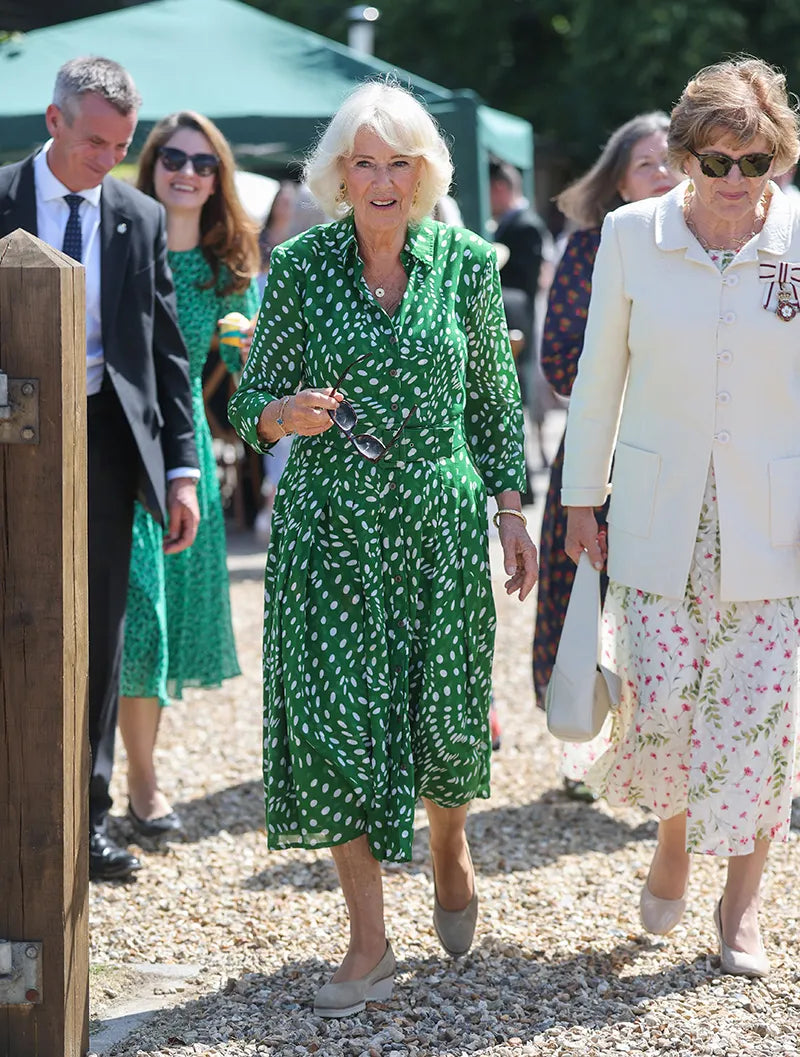
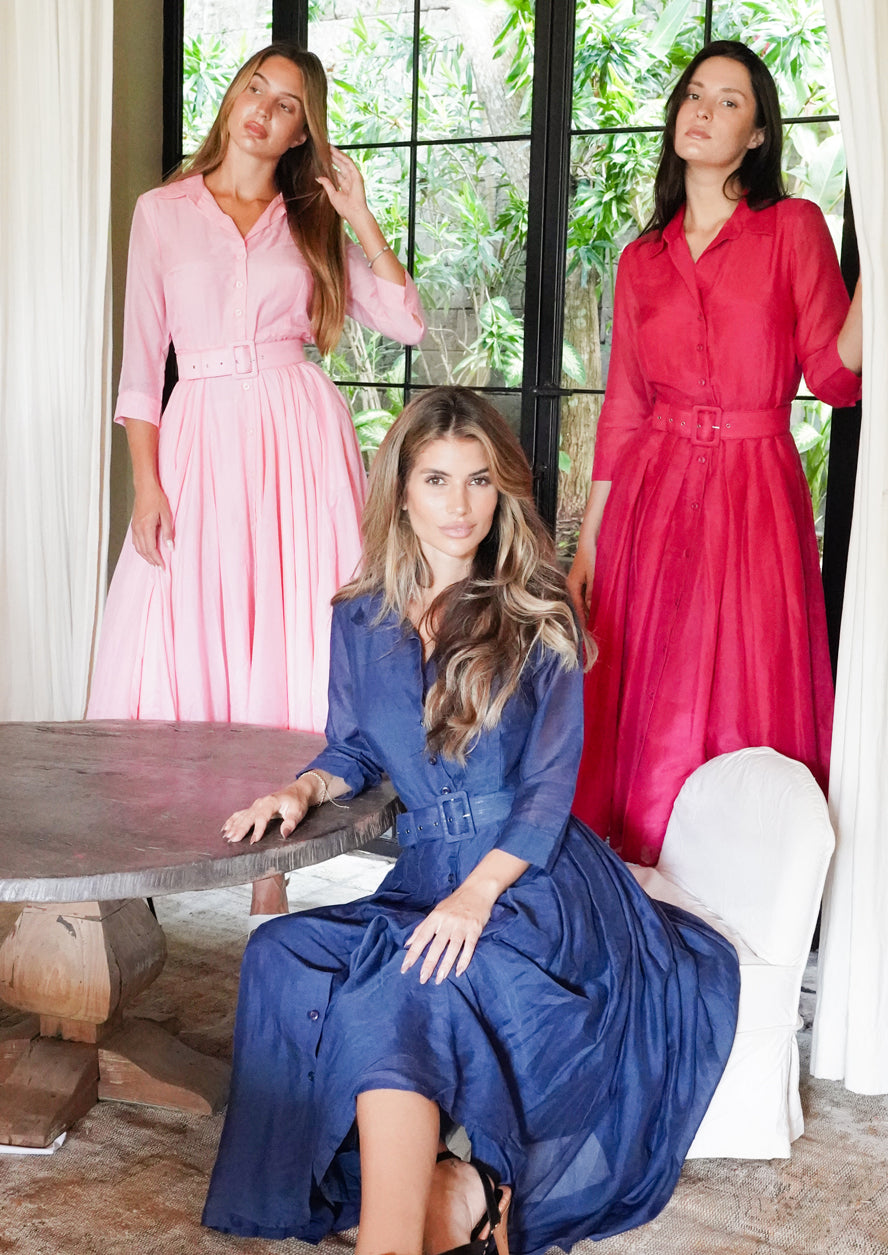
For this new collection, Samantha Sung created the Shibori Tie pattern to synchronize with the shape of the dress itself. Each print is engineered in circular movement so the artwork follows the body when you walk, hand threaded, hand tied, and hand dyed in our signature Musola cotton. Every dress is the result of multiple engineered artworks, one for the bodice, one for the skirt, and even one for the scarf, so the print flows correctly through every panel of the finished piece.
The Art of Movement
The Shibori Tie pattern begins with a single idea, that a tie-dye print can move together with the silhouette it lives on. To create the artwork, every piece is hand threaded first, then pulled and tied before the dye process begins. The threads form resist lines that, once removed, leave behind the soft white spaces that define each pattern. The remaining surface is hand dyed in pink, red, yellow, cobalt blue, indigo, and other vibrant summer shades. The result is a print that feels less like a flat motif and more like a record of motion, each line a trace of the hand that made it.
Why Musola Matters
At the center of the collection is Samantha Sung's signature Musola cotton. In thread, there are different numbers, 40, 60, 80, and the higher the number the finer the thread becomes. The Musola used in these dresses is 100 and 120, exceptionally fine and lightweight. To prevent transparency without losing breathability, the fabric is doubled, and the volume of cloth in a single dress can exceed twenty meters. Yet because the cotton is so fine, the finished piece never feels bulky. It moves like air against the body.
"When natural air moves into it, it just moves the fabric."
Engineered by Hand
Every Shibori Tie print is created in multiple versions to work across the geometry of a single dress. The bodice, the skirt, the scarf, and the bias-cut panels each need a different version of the artwork so the pattern flows correctly once sewn together. A single dress may require three or four engineered variations of the same print before the final garment is complete. Every piece is considered from the first thread to the final movement of the fabric, with the goal that the eye finds the same conversation moving through every panel.
"There is a lot of artwork going into one dress."
Fabric Creates the Mood
For Samantha, the fabric determines how a dress feels emotionally. The same Shibori print can feel relaxed and breezy in airy Musola cotton, refined and quieter in silk, or more dramatic when printed on a structured ground. The Shibori Tie collection is designed to move between daytime ease, beach dressing, travel, dinners, and evening occasions, simply by changing the cloth underneath the artwork. The print is the constant. The fabric is the mood.
"My dresses are always about breezy fabric and movement."


Designer's Notes
What makes the Shibori Tie collection different from other tie-dye dresses?
Every Shibori Tie pattern is engineered in circular formations to synchronize with the movement of the dress, hand threaded and hand tied before being hand dyed. This is not a printed pattern applied to flat cloth but an artwork built into the geometry of the garment, with separate engineered variations for the bodice, the skirt, and the scarf.
How much fabric goes into a single Shibori Tie dress?
A single dress can carry over twenty meters of Musola cotton. Because the fabric is doubled to prevent transparency, the volume is significant, but the cotton is so fine, 100 to 120 thread count, that the finished dress remains light and airy even at its fullest.
What is Musola cotton and why does Samantha use it?
Musola is an exceptionally fine, lightweight cotton woven from extremely high-count thread. Samantha uses it because it allows the hand-dyed Shibori color to bleed naturally into the cloth, and because it breathes and moves with the body, making it ideal for warm-weather dressing.
Why are some Shibori Tie patterns engineered separately for the bodice and the skirt?
Each panel of the dress is cut at a different grain, sometimes bias for the skirt, straight for the bodice, so the same print would read differently across each section if applied flat. Samantha engineers a separate variation of the artwork for each panel so the pattern flows correctly across the entire finished garment.
Is every Shibori Tie dress truly hand made?
Yes. Every step of the Shibori process is done by hand: threading the resist lines, pulling them tight, tying off each section, and hand dyeing the cloth. No two pieces are identical because the hand-work itself creates the variation.
What colors does the Shibori Tie collection come in?
The collection is dyed in pink, red, yellow, cobalt blue, indigo, and other vibrant summer shades. Each color is hand mixed and hand applied, so the depth and saturation are unique to each piece.
How does the same Shibori print feel different on different fabrics?
The print is the constant; the fabric is the mood. On airy Musola cotton, the pattern feels relaxed and breezy. On silk or a structured ground, the same artwork can feel more refined or more dramatic. Samantha designs the Shibori Tie collection to move between daytime, beach, travel, dinners, and evening through this choice of cloth.
Where can I see the full Shibori Tie collection?
The full Shibori Tie collection lives at samanthasung.com/collections/shibori-tie. The current pieces include the Abelia Dress in Cotton Stretch and the Aster Dress in Musola, with more silhouettes to follow as the collection grows.
Where is Samantha Sung based?
Samantha Sung is based in Bali, Indonesia, with production partnerships in Italy. The hand-thread and hand-dye work for the Shibori Tie collection is done by Balinese artisans who specialize in resist dyeing techniques.